What Is a Proof of Purchase? A Simple Guide
Think of the last thing you bought. Maybe it was your morning coffee, a new pair of shoes online, or even your weekly groceries. You almost certainly got a little piece of paper or an email confirming that purchase. That’s a proof of purchase, and it's far more important than most people realize.
It’s the official handshake between you and the seller—a simple, verifiable record that says, "Yes, this transaction happened." This single document is your best friend when it comes to returns, warranties, or just keeping track of your spending.
Unpacking the Role of a Proof of Purchase
At its heart, a proof of purchase is just evidence. It’s a document, whether printed or digital, that confirms you paid for a specific item or service. It lays out the essential facts: what you bought, where you bought it, when, and for how much.
It could be a crumpled slip from the corner store or a detailed email confirmation from an online giant. The format doesn't matter as much as its function: to create a clear, undisputed record of the sale.
This isn't a new concept, but it's evolved right alongside how we shop. Printed receipts became common in the 20th century, cementing consumer rights and holding businesses accountable. Fast forward to today, with global e-commerce sales projected to soar to $6.86 trillion by 2025, digital proof of purchase has become absolutely critical. You can discover more about online shopping trends and see just how many transactions rely on these electronic confirmations.
Why It Matters to Everyone
A proof of purchase does more than just let you return a shirt that doesn’t fit. It's a cornerstone of trust and accountability for everyone involved.
For you, the customer, it's:
- Your ticket for returns and exchanges. Most stores have a "no receipt, no return" policy, and this is why.
- The key to unlocking your warranty. If a product breaks, the manufacturer will ask for proof of purchase to confirm when you bought it.
- Necessary for cashing in on rebates. Companies need to verify you actually bought the qualifying product.
For businesses, it’s just as vital. It helps them:
- Keep accurate sales and inventory records. This data is crucial for accounting and knowing what's on the shelves.
- Stop return fraud in its tracks. It confirms that the item being returned was actually purchased from their store.
- Settle customer disputes quickly. When disagreements pop up, the receipt is the official record of the transaction.
Here’s a quick breakdown of the essential jobs a proof of purchase handles:
| Key Functions of a Proof of Purchase |
| :--- | :--- |
| Function | Why It Matters |
| Transaction Verification | Provides undeniable evidence that a sale occurred, protecting both buyer and seller. |
| Returns & Exchanges | Serves as the primary document required by retailers to process a return or exchange. |
| Warranty Claims | Enables consumers to activate warranties for repairs or replacements. |
| Expense Tracking | Acts as an official record for personal budgeting, business expenses, and tax purposes. |
| Fraud Prevention | Helps businesses prevent fraudulent returns and ensures only legitimate purchases are refunded. |
These functions show how the proof of purchase is more than just a piece of paper; it’s a tool for transparency.
In short, a proof of purchase turns a simple transaction into a secure, verifiable exchange. It gives you, the consumer, clear rights and gives businesses the documentation they need to run smoothly.
Whether it’s a straightforward supermarket receipt template or a more detailed generic invoice, the goal is the same: capture the vital details. In today's world of commerce, this kind of documentation isn't just helpful—it's essential.
Exploring Different Types of Proof of Purchase
When you hear the term "proof of purchase," it might sound a bit official, but you actually deal with different kinds of it all the time. It’s not just one specific document, but a whole family of records that do one simple thing: confirm you bought something. Getting a handle on the common forms means you’ll know exactly what to keep and when you’ll need it.
The most familiar example is the classic paper receipt. It's that slip of paper you get handed at the checkout, whether you're at the grocery store, a coffee shop, or filling up your car with a gas receipt. This little document is packed with important info: the store’s name, the exact date and time, a list of what you bought, and the final amount you paid. For any purchase you make in person, it's the most straightforward proof you can have.
This visual breaks down the main ways you get proof of a transaction.
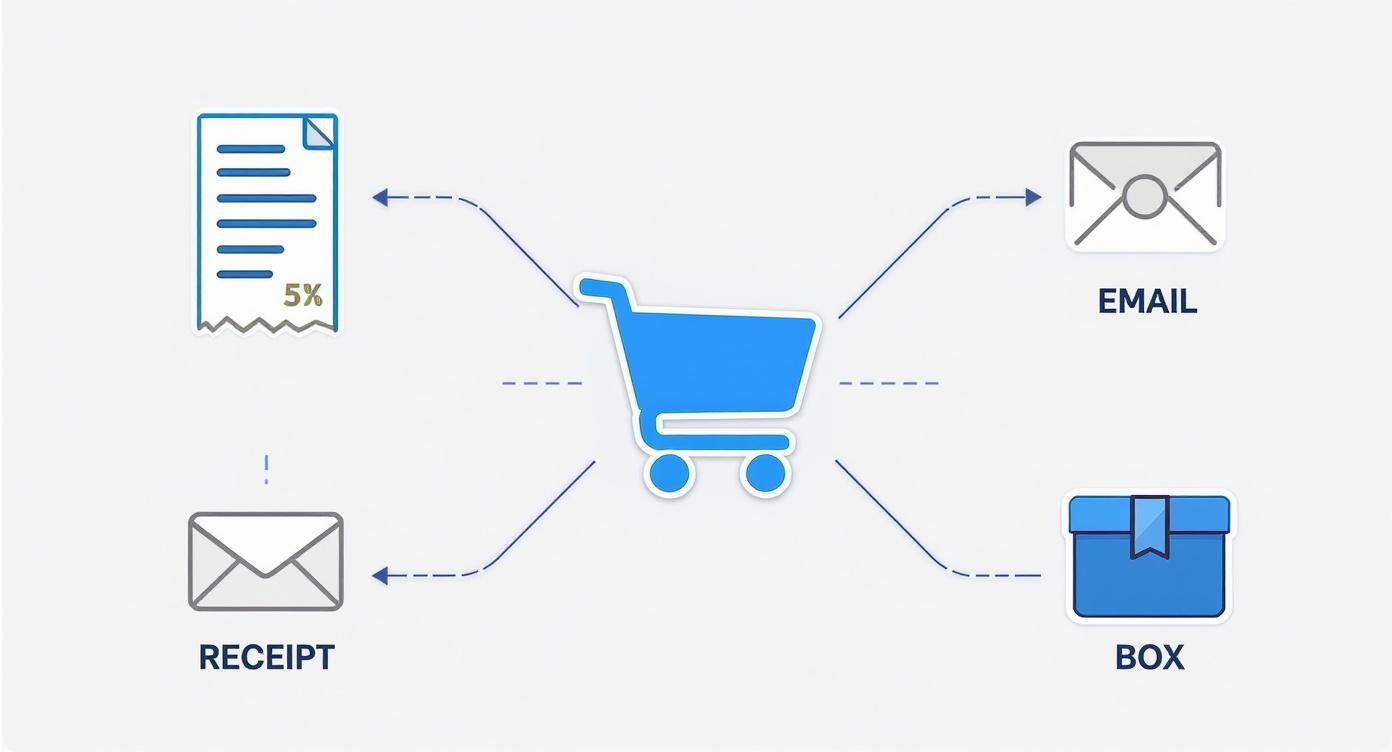
As you can see, it doesn't matter if you buy something online or in a physical store—there’s always a verifiable record created, whether it’s a printed receipt, an email confirmation, or a packing slip.
Receipts Versus Invoices
It's really easy to get receipts and invoices mixed up, but they serve opposite purposes. A receipt is your proof that you’ve already paid. An invoice, on the other hand, is a bill—it's a formal request for payment. You’ll see invoices most often for services. Think of a freelance designer billing you for a logo, or a contractor detailing the costs for a home repair before you pay up.
Once you pay an invoice, you'll usually get a receipt to show the transaction is complete. Whether you're creating documents for your own business or just trying to keep your records straight, a clean format makes all the difference. You can see how a standard generic POS receipt lays out all the essential details in a clear, professional way.
Digital Forms of Proof
With so much of our shopping happening online, digital proof of purchase is now the norm. The good news is these digital records are just as legitimate as paper ones, and frankly, they’re often much easier to keep track of.
- Email Order Confirmations: The second you hit the "Complete Purchase" button online, an order confirmation email typically pops into your inbox. This email acts as your official digital receipt, complete with your order number, a breakdown of the items, shipping details, and a payment summary.
- Packing Slips: This is the sheet of paper that comes inside the box with your order. While it might look a lot like a receipt, its main purpose is to be a checklist, ensuring everything you ordered made it into the package. It's also a fantastic secondary form of proof of purchase.
- Bank or Credit Card Statements: If you're in a bind and can't find anything else, your bank statement can be a lifesaver. It shows the date, the merchant’s name, and the exact amount charged. While some stores might not accept it for a simple return, it's often more than enough for a warranty claim or just for tracking your own expenses.
Whether it’s a piece of paper, an email, or a slip in a box, every type of proof of purchase creates a crucial link between you and the seller. Holding onto the right one means you're always ready for whatever might come up after the sale.
Why Your Proof of Purchase Is So Important
Think of a proof of purchase as more than just a slip of paper confirming you spent money. It’s your golden ticket for consumer rights. It's the one document that backs you up, providing the legal muscle you need for returns, refunds, and exchanges.
Without it, you're often relying on the store's goodwill. With it, you have undeniable proof of the transaction, which is everything when you need to hold a business accountable for what it sells.
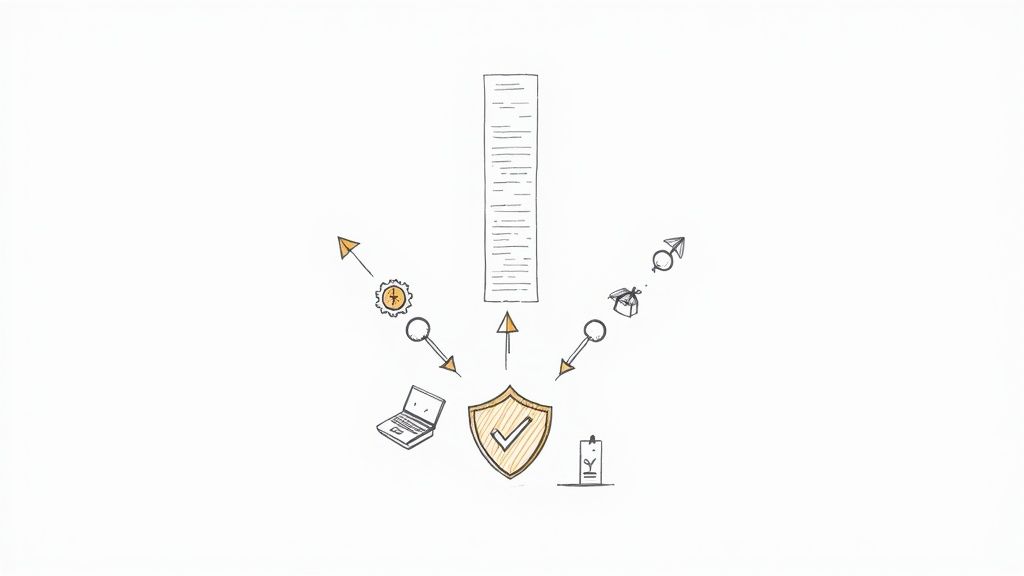
The real value of this document snaps into focus when something goes wrong. Let's say you buy a new laptop, and it dies a few weeks later. The manufacturer's first question will be, "Can I see your proof of purchase?" That little piece of paper is what validates your warranty, proving exactly when and where you bought it and kicking off the warranty period.
Protecting Your Investments
Your proof of purchase is a powerful tool that extends far beyond simple retail returns. It’s a key player in several other financial situations, protecting your money and your property.
- Warranty Claims: Just like with the laptop, a valid receipt is your non-negotiable ticket to activating a warranty on electronics, appliances, or any other big-ticket item.
- Insurance Purposes: If something you own is stolen or damaged, your insurance company will need proof that you owned it and what it was worth. A detailed receipt is the perfect evidence to support your claim.
- Tax Deductions: For freelancers and small business owners, almost every business-related purchase can be a tax write-off. Keeping solid records—like a gas receipt for work travel or a simple sales receipt for office supplies—is absolutely critical for filing your taxes correctly and getting the biggest return possible.
At the end of the day, these records are your financial breadcrumbs. They provide the hard evidence you need to back up claims, justify expenses, and shield yourself from potential loss.
Holding onto your receipts isn't just about collecting clutter. It's an active step toward protecting your financial interests and making sure you can exercise your consumer rights whenever you need to.
Beyond Simple Returns
The power of a proof of purchase doesn't stop there. It's also essential for things like mail-in rebates and company expense reports. To get that rebate, the company needs a copy of your receipt to confirm you bought the right product during the promotional window.
The same goes for work. If you need to get reimbursed for a business lunch or a flight, you'll have to submit a detailed restaurant receipt or hotel bill.
Each of these examples points to the same simple truth: a proof of purchase is your official, indisputable evidence that a transaction happened. Making a habit of keeping these documents organized is a small effort that offers huge protection, ensuring you’re always ready for whatever comes your way.
What to Do If You've Lost Your Proof of Purchase
We’ve all been there. That sinking feeling when you need to return something or make a warranty claim, but the receipt has vanished. It can feel like you’ve lost your ticket to a refund, but don't panic just yet. In most cases, you can still track down or recreate the proof you need.
Before you turn your house upside down, start with your digital trail. If you bought the item online, a confirmation email is almost certainly waiting in your inbox. Just search for the store's name or the product. Most online retailers also keep a handy order history right in your account on their website or app.
Dig Into Your Digital and Financial Records
As shopping has shifted online, our digital records have become our best friends. It’s a huge change from the days of stuffed wallets and shoeboxes full of paper. Think about it: mobile devices are used for 72% to 80% of online shopping visits worldwide. With mobile shopping in the U.S. hitting a staggering $470 billion in 2023, digital proof of purchase is more common—and more accessible—than ever. This shift actually makes life easier for consumers, smoothing out the process for returns and warranty claims.
But what if you bought it in a physical store? Your next best bet is to check your payment records.
- Bank or Credit Card Statements: Your statement is a goldmine of information. It shows the merchant’s name, the transaction date, and the exact amount. While it might not work for a straight cash refund, it's often enough for a store to look up the transaction and reprint the original receipt for you.
- Retailer’s System: Head back to the store or give them a call. If you can provide the date of purchase and the credit or debit card you used, they can often find the sale in their system and print you a fresh copy.
Don't underestimate your payment history. A credit card statement, especially with the last four digits of your card, is often the only key a store needs to unlock your transaction details and find that lost proof of purchase.
Creating a Replacement for Your Records
Okay, so what if you've tried everything and still come up empty? Sometimes you just need a copy for your own files—maybe for tracking expenses or for your small business bookkeeping. In these cases, recreating the document is a perfectly practical solution for your internal records.
This is a common headache for freelancers and business owners who need every receipt accounted for when it's time to do the books. Using a tool to generate a replacement helps fill in those pesky gaps in your financial records. The process is simple: you pick a template, fill in the details of the purchase, and create a copy for your files.
You can easily generate a receipt for your records using an online tool that walks you through it. For instance, you could select a standard retail store receipt or a simple sales receipt that matches the original.
By following these steps, you can almost always recover or replace a lost proof of purchase. It just takes a little digging, ensuring you can still handle returns, file claims, and keep your financial records in perfect order.
Simple Ways to Manage Your Receipts
Let's be honest, keeping track of every single proof of purchase can feel like a full-time job. We've all been there—shoving receipts into a wallet, a glove box, or a kitchen drawer, only to face a frantic search when we actually need one. A little bit of organization upfront can save you a massive headache later, whether you're trying to make a return, claim a warranty, or file your taxes.
The key isn't some complex, over-the-top system. It's about finding a simple method that you'll actually stick with, whether that's digital, physical, or a mix of both.
Digital Versus Physical Organization
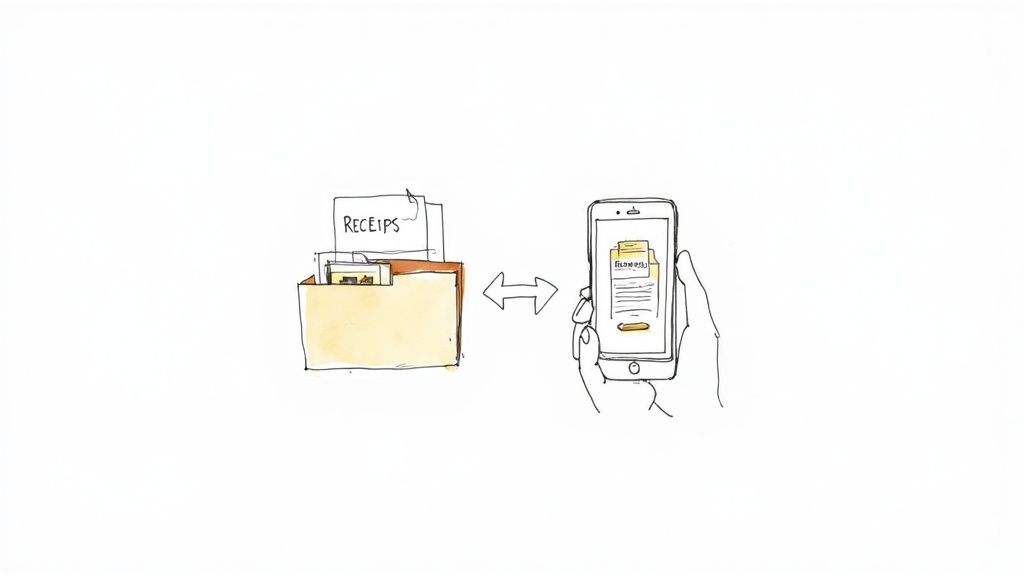
The old-school approach still works for many: a simple accordion file or a binder. You can create tabs for each month or organize by category like "Household," "Business Expenses," or "Auto." Just drop your paper receipts in as they come. It's wonderfully low-tech and straightforward, but you run the risk of receipts fading, getting lost, or being damaged.
This is where digital methods really shine. Going digital gives you security and incredible convenience. Your records are protected from physical damage, easily searchable, and you can access them from anywhere.
Here's a pro tip: Get into the habit of snapping a quick photo of any important paper receipt the moment you get it. This creates an immediate digital backup before the original even has a chance to get crumpled or lost.
Easy Digital Storage Solutions
Switching to a digital system is a lot simpler than it sounds. You don't need fancy software—just a few smart strategies to build a tidy and effective archive for every proof of purchase.
Here are a few of the easiest and most popular ways to do it:
- Create a "Receipts" Email Folder: This one is a game-changer. Just make a new folder in your email account and name it "Receipts" or "Purchases." Every time an order confirmation hits your inbox, just drag it over. Your inbox stays clean, and all your digital proofs are in one searchable spot.
- Use Cloud Storage: Services like Google Drive or Dropbox are fantastic for this. You can create a main folder for receipts and then organize it with subfolders by year or spending category. It’s perfect for storing photos or scans of your paper receipts.
- Try a Scanning App: There are tons of apps on your phone designed specifically for scanning and logging receipts. Many even use technology to automatically pull out key details like the store name, date, and total amount, which makes searching a breeze.
Whatever digital route you take, a consistent naming system will be your best friend. A file named "BestBuy_Laptop_Dec2023.pdf" is a whole lot easier to find than "IMG_7890.jpg." This small habit turns a frustrating search into a quick, two-second task. And if you need to create records with a consistent, professional look, you can always explore different receipt templates to keep everything uniform.
Common Questions About Proof of Purchase
Alright, let's tackle some of the most common questions that pop up when dealing with proof of purchase. Knowing the answers to these can save you a lot of headaches, whether you're trying to make a return or just keep your records straight.
Can a Bank Statement Be a Valid Proof of Purchase?
Yes, a bank or credit card statement can definitely work as proof of purchase, but it’s not always a perfect substitute for a receipt. Think of it as a solid backup plan. It clearly shows the date, the store's name, and how much you paid, which is often enough to solve a problem.
Many stores will use your bank statement to find the original transaction in their system and print a new receipt for you. It’s also usually good enough for warranty claims, since manufacturers mostly just need to see when you bought the item. The catch? For a simple return or exchange, some retailers might still insist on seeing the original, itemized receipt. It all comes down to their store policy.
Is a Gift Receipt a Real Proof of Purchase?
Absolutely. A gift receipt is a completely valid proof of purchase, just a special kind. It’s cleverly designed to prove an item was bought from a specific store without showing the price. This way, the person receiving the gift has no idea what you spent.
Its main job is to let the recipient make an exchange or get store credit. Since the price is missing, you almost never can get a cash refund with it. It's the perfect solution for giving someone a gift with flexibility, minus the awkwardness of them seeing the price tag.
The core difference is simple: a standard receipt is for refunds and exchanges, while a gift receipt is almost exclusively for exchanges or store credit. It validates the purchase without disclosing the financial details.
How Long Should I Keep My Receipts?
This is a great question, and the answer really depends on what you bought. There's no one-size-fits-all rule, so it’s best to think about your purchases in a few different categories.
- Minor, everyday stuff: Things like your morning coffee or weekly groceries. Once you're sure you won't be returning anything, feel free to toss these receipts.
- Major purchases: For anything that comes with a warranty—think electronics, appliances, or furniture—you need to hold onto that proof of purchase for at least as long as the warranty lasts. It’s your golden ticket if something goes wrong.
- For tax purposes: If a purchase could be a tax deduction (like business expenses or charitable donations), you’ll want to keep that receipt for a while. A good rule of thumb is three to seven years, depending on your local tax laws.
What Details Must Be on a Proof of Purchase?
For a piece of paper (or an email) to be considered a legitimate proof of purchase, it needs to tell the whole story of the transaction. The format can change from store to store, but the essential details are always the same.
A valid proof of purchase, like a detailed retail store receipt, should always have these key pieces of information:
- Retailer Information: The name and address of the store.
- Transaction Date: The exact day the purchase happened.
- Itemized List: A clear breakdown of every item you bought.
- Total Amount Paid: The final cost, including all taxes.
- Payment Method: A note of how you paid (e.g., Visa, cash, etc.).
These details confirm the what, where, when, and how much, making it an undeniable record of your purchase. You can see how these details are laid out on everything from a simple gas receipt to a more complex hotel receipt.
Keeping your financial records in order doesn't have to be a chore. For those times you need to create a clear, professional receipt for your own files or for your small business, ReceiptMake offers a quick and painless solution. Generate any receipt you need in seconds at https://receiptmake.com.

