
Create Your Receipt of Delivery Template
A simple receipt of delivery template is more than just a piece of paper. It's the handshake at the end of a transaction, the official proof that the goods you sent have safely arrived where they were supposed to. This document is your record, protecting your business from headaches and disputes by proving the job was done.
Why Delivery Receipts Are So Important for Your Business
In any business, that final step—the actual handover of the goods—is where things can get tricky. Without a formal acknowledgment from the customer, you're leaving yourself wide open to all sorts of risks, from losing money to damaging your hard-earned reputation. A solid receipt of delivery is your best defense, closing the loop on every single order with a clear, signed record.
Think about this all-too-common scenario: a customer buys something valuable from your online store. You ship it, and the tracking confirms it was delivered. But a week later, a chargeback hits your account. The customer is claiming the package never showed up. Without a signed delivery receipt, it’s just your word against theirs—and credit card companies often lean in favor of the customer. That one simple document can be the difference between getting paid and taking a serious loss.
Your Legal and Financial Shield
At its heart, a delivery receipt is a legitimate document. It’s real-world evidence that you held up your end of the deal. This is especially crucial in B2B transactions where you might be dealing with large orders or expensive equipment.
A signed receipt of delivery is your most powerful tool in a payment dispute. It shifts the burden of proof from you to the claimant, instantly validating your fulfillment process and protecting your revenue.
This simple piece of paper (or its digital version) directly protects your bottom line by cutting down on chargebacks and shutting down false claims of non-delivery. It's the proof you need to ensure you get paid for what you sent. For your own books, it's just as important as a standard Sales Receipt, as it officially closes out the fulfillment cycle.
Building Customer Trust and a Professional Image
Beyond just protecting you, a good delivery receipt process actually makes your customers feel better. When you ask for a signature, you're sending a clear message: you take their order and its security seriously. It’s a small thing, but it builds a real foundation of trust and reliability.
Just think about the impression it makes:
- You're Organized: A clean, branded receipt shows you run a tight ship.
- You're Accountable: It tells customers you believe in transparency and are committed to getting it right.
- You're Professional: It turns a simple drop-off into a professional exchange.
Customers appreciate knowing their purchase is being handled with care from the moment they click "buy" to the second it arrives. A consistent documentation process, just like providing a detailed Cash Receipt, shows them they’re working with a business that has its act together.
Making Your Operations Run Smoother
A standardized receipt of delivery template also works wonders for your internal workflow. It gives your drivers and warehouse crew a clear, uniform process, which means fewer mistakes and no more missing information.
When a customer calls asking about a delivery, your team can instantly pull up the signed document and confirm the time, date, and who received it. No more frantic searches for information. This allows your staff to resolve questions quickly, keeping customers happy and operations humming. Whether you're dropping off local orders or managing complex freight, having a reliable system is a must. A consistent format, like a General Goods Delivery Receipt, ensures every single delivery is documented the right way, every time.
What Goes Into a Solid Delivery Receipt Template?
A good receipt of delivery isn't just a simple checklist; it's a carefully crafted document where every single field has a job to do. If you miss even one key piece of information, you could find yourself in a tough spot during a dispute. Let's walk through the essential parts that make a delivery receipt clear, complete, and legally sound.
Think of it like building a house. You need a solid foundation (who sent it and who it's for), strong walls (the list of items), a secure roof (the signature), and a unique address (the tracking number). Each piece is crucial for the whole thing to hold up.
Core Identifying Information
First things first, you have to be crystal clear about who is involved. This might seem obvious, but a mistake here can make the whole document useless. You need complete and accurate details for both the sender and the person receiving the goods.
- Sender/Shipper Details: This means your company’s full legal name, physical address, phone number, and email. Adding your logo is a nice touch for a more professional look.
- Recipient/Consignee Details: Get the full name of the person or company, their complete delivery address, and a contact phone number. Vague descriptions like "the warehouse on Smith St." just won't cut it.
Getting this right removes any doubt about who was involved, making the receipt a clear record of the delivery's journey from start to finish.
The Nitty-Gritty of the Delivery
Once you know who is involved, you need to document what happened and when. This section provides the hard facts of the shipment, creating a record that's tough to argue with.
A unique tracking or order number is absolutely essential. This number is the thread that connects this specific delivery receipt back to the original order in your system, making it a breeze to look up later. Without it, you're left with a generic piece of paper that’s hard to link to any particular sale. It’s the same reason a good Generic POS Receipt uses a transaction ID—to track a specific purchase.
You also need to nail down the date and time of delivery. This timestamp is your proof, especially if you’re working with tight delivery windows or deadlines. Don't just write the date; note the exact time the recipient signed for the package.
A Clear Rundown of the Goods
This is where you get really specific. The itemized list is the heart of your delivery receipt, and it should leave zero room for confusion about what was in the shipment. For every single item, you should include:
- Item Description: A clear, specific name for the product.
- SKU or Item Number: The product's unique code from your inventory system.
- Quantity: The exact number of units delivered.
- Condition Notes (Optional but Recommended): A small space to note the condition of the items on arrival, like "Box sealed" or "Minor cosmetic damage to packaging."
This level of detail is your best defense against "I never got that item" claims and ensures your records match the customer's original order.
The sheer volume of global shipping shows why these details matter. The package delivery market is a beast, projected to hit 498 billion packages shipped worldwide by 2028. That breaks down to roughly 12,059 parcels shipped every single second, making standardized paperwork like delivery receipts more important than ever for tracking and resolving issues.
Key Takeaway: A vague item list is just asking for trouble. Be specific. Instead of "Electronics," write "1 x Model T-800 Smart Speaker, SN: 482B-9."
The Final Handshake: The Signature
The last—and arguably most important—piece of the puzzle is the recipient’s acknowledgment. That signature is the legal confirmation that they have received the goods as described.
Your template must have a dedicated space for the recipient's printed name and their signature. I also recommend adding a line for the date right next to the signature to lock in the timeline. This signed confirmation officially transfers responsibility for the goods from you to your customer, neatly tying up the delivery process.
To help you put this all together, here’s a quick breakdown of these critical components.
Key Components for Your Receipt of Delivery Template
This table outlines the crucial fields every receipt of delivery should have, explaining why they're important and giving you a real-world example.
| Component | Purpose | Example |
|---|---|---|
| Sender & Recipient Info | Clearly identifies the parties involved in the transaction. | Sender: Acme Widgets Inc, 123 Industrial Way. Recipient: John Doe, 456 Customer Ave. |
| Unique Order/Tracking Number | Links the delivery to a specific transaction in your system. | Order #INV-2024-00789 |
| Itemized Goods List | Provides a detailed record of what was delivered. | 1x Blue Widget (SKU: WID-BL-01), 2x Red Gadget (SKU: GAD-RD-05) |
| Delivery Date & Time | Establishes the exact moment the transfer of goods occurred. | October 26, 2024, 2:15 PM |
| Recipient Signature | Serves as legal proof of acceptance and receipt of the items. | A clear signature with the printed name "John Doe" underneath. |
By making sure your template includes all of these elements, you’re not just creating a piece of paper—you’re creating a reliable, professional, and protective business record.
Tweaking Your Template for Different Industries
A generic, one-size-fits-all receipt of delivery just doesn't cut it. Every industry has its own quirks and risks, and a standard document can easily miss the crucial details that actually protect your business. Customizing your template isn't just about looking professional; it's a smart way to head off common disputes and keep your operations running smoothly.
The trick is to think about the specific challenges and requirements you face every day. A small tweak to your receipt can make a huge difference in creating clarity and accountability.
For High-Value or Fragile Goods
When you’re handling items like furniture, electronics, or artwork, the item's condition at the moment of delivery is everything. A simple signature on a line doesn’t do much to protect you from a customer claiming something was damaged after your driver left.
This is where a dedicated Condition Inspection section becomes your best friend. It’s a simple checkbox or a short field that requires the recipient to actively confirm the state of the goods.
- Example Wording: "I have inspected the item(s) and confirm there is no visible damage (e.g., scratches, dents, cracks) unless noted below."
- Actionable Tip: Always include a blank space for notes. If a customer spots a tiny scratch on a table leg, they can jot it down right then and there. Both of you sign off on it, and that simple act prevents a minor issue from turning into a major "it arrived broken" headache later.
This simple addition transforms your receipt from just a proof of delivery into a proof of condition, giving you a much-needed layer of security.
The infographic below shows the basic building blocks of any solid delivery receipt. You can use these as your foundation and then add the custom touches your industry needs.
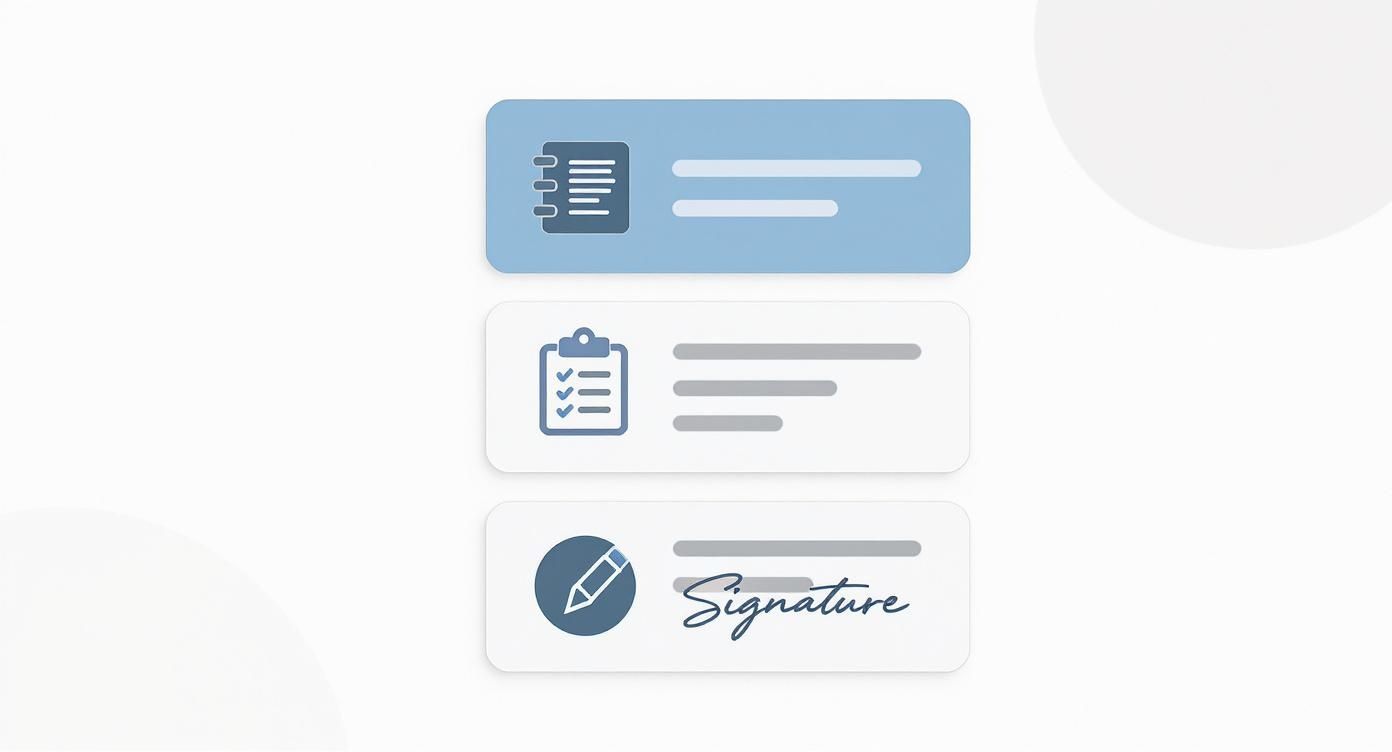
This visual breaks down the core elements: clear info on who's involved, a detailed list of what's being delivered, and a signature to make it official. These are the non-negotiables you'll build on.
B2B and Bulk Shipments
Business-to-business deliveries are a whole different ballgame compared to dropping a package on a doorstep. You could be delivering raw materials, pallets of inventory, or critical components for a manufacturing line. Here, accuracy is absolutely critical.
A generic template will completely miss the mark, lacking the fields needed for proper inventory and quality control.
For B2B suppliers, the delivery receipt is a key piece of the supply chain puzzle. Adding fields for batch numbers, pallet IDs, and seal numbers creates an unbroken chain of custody from your warehouse to your client's floor.
Here are a few must-have fields for B2B transactions:
- Batch or Lot Number: Essential for tracking product origins, especially in industries like food, pharmaceuticals, or manufacturing where traceability is everything.
- Pallet ID: If you ship on pallets, noting each one's unique ID helps with warehouse management for both you and your customer.
- Seal Number: For high-security loads, documenting the truck or container seal number is proof that the shipment wasn't tampered with along the way.
By adding these specific fields, your receipt becomes a vital tool for your client’s own inventory system.
Customization for Service-Based Deliveries
Not all "deliveries" involve physical products. Think about equipment rentals, document couriers, or even catering. Each of these services has unique confirmation needs that your paperwork should reflect.
A catering company, for instance, needs to prove more than just that the food showed up. Their receipt might include a checklist to verify that hot items were at a safe temperature or that all serving platters were accounted for. You can adapt a flexible template, much like a Restaurant Bill, to fit these unique service requirements.
Think about these real-world examples:
- Equipment Rental: Add fields for "Start Time" and "End Time" to lock in the exact rental window. A spot to note the "Fuel/Charge Level" on machinery is also a smart move.
- Document Courier: Include a "Recipient's Title/Department" field. This ensures sensitive legal or financial documents got to the right person, not just the front desk.
- Food Delivery: A simple "Order complete and correct" checkbox can put a stop to those annoying follow-up calls about missing sodas or side dishes.
Whatever your industry, the goal is always the same: make your receipt of delivery template work for you by capturing the information that truly matters.
Ready to Build Your Own Template? Here's How.
Alright, enough with the theory. Now for the fun part: turning all that knowledge into a professional receipt of delivery template that works for your business. You don't need to be a designer or a tech wizard. With a tool like ReceiptMake, you can have a polished, ready-to-use document in just a few minutes.
This is about more than just a piece of paper; it’s about protecting your business and giving your customers a seamless, professional experience. Let's get it done.
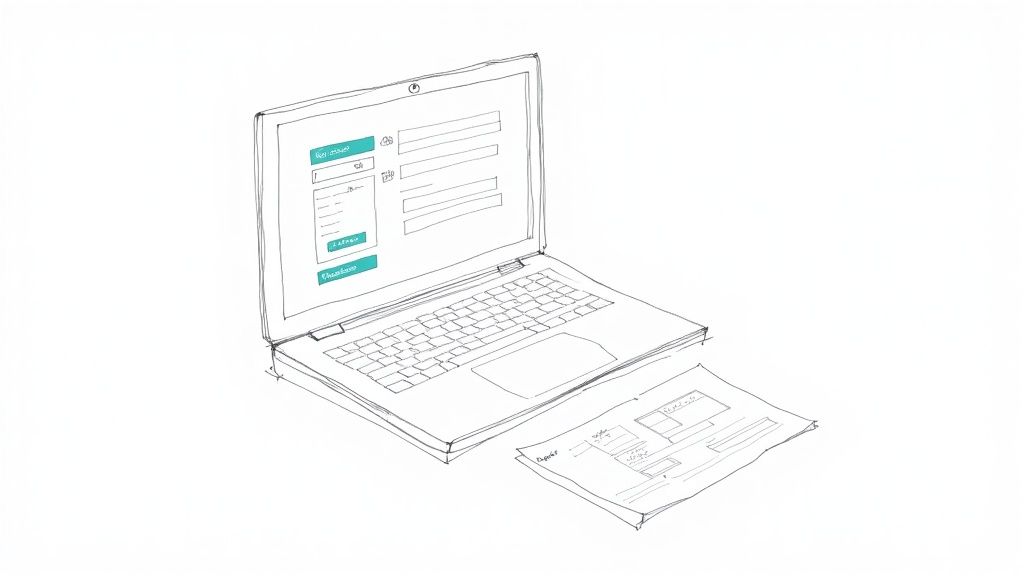
As you can see, you’re not starting from a blank slate. There are plenty of clean, professional layouts to choose from, giving you a great head start. Just pick one that feels right for your brand and you're off to the races.
Start with a Solid Foundation
First things first, you need to pick your starting point. While you could build a template from scratch, why reinvent the wheel? Starting with a pre-designed layout is a huge time-saver.
For most situations, the standard Delivery Receipt Template is the perfect base. It comes loaded with all the essentials—sender and recipient info, an itemized list, and that all-important signature block. It’s a solid, professional framework you can quickly make your own.
Add Your Business Details
Once you've got your template, it's time to brand it. This is what separates a generic form from your official document.
Populate the core business information:
- Business Name: Your full, official company name.
- Address: Your primary physical address or office.
- Contact Info: A phone number and email so customers can easily reach you.
Don't forget to upload your logo! This is probably the most important step for making the receipt look legitimate and trustworthy. A logo instantly elevates the document and reinforces your brand. It’s a small touch that makes a huge difference.
Customize the Fields to Fit Your Workflow
Here’s where you can really tailor the document to how you operate. Think back to the industry-specific needs we talked about earlier. Now's the time to put them into action.
For instance, if you deliver furniture, you might add a custom field for "Condition on Arrival." A B2B supplier could add a space for a "Pallet ID" or "Batch Number." With ReceiptMake, you can easily rename, add, or remove columns and text boxes to capture the exact information you need.
The need for this level of detail is only growing. The global parcel shipping market is absolutely exploding, with projections showing parcel volume will skyrocket to 217 billion by 2025. This boom, which is already generating $1.15 trillion in revenue in 2024, means that clear, accurate delivery documents are no longer just nice to have—they're essential for keeping customers happy and staying ahead of the competition.
Download, Save, and Get Back to Business
After you’ve customized everything and filled in the delivery details, you’re ready to wrap up. ReceiptMake gives you a live preview, so what you see is exactly what you get.
My Two Cents: Before you hit "download," give it one final proofread. A simple typo in an address or phone number can create a real mess later. A few seconds of review can save you hours of headaches.
Once it's perfect, you can download the completed receipt as a PDF for your digital records or email it straight to the customer. You can also print hard copies if your drivers need them for their routes.
But here’s the real time-saver: you can save your customized design as a new template. The next time you visit the receipt generator, your branded layout with all its custom fields will be waiting for you. This transforms a multi-step chore into a simple fill-in-the-blanks task, saving you precious time on every single order. That's how you build a documentation process that actually scales with your business.
Smart Ways to Manage Your Delivery Receipts
Getting a signature on that receipt of delivery is a great first step, but it's not the end of the road. What you do with that signed document is just as important. A well-managed system for your delivery receipts can be a lifesaver when you're dealing with a payment dispute or a customer says a package never arrived.
Think about it: a signed receipt crumpled in a glove box or lost in a chaotic filing cabinet isn't going to do you much good. The real power of that document comes from being able to pull it up the moment you need it. This is where having a simple, organized management process really pays off.
Get Your Digital Filing in Order
The easiest and most effective way to handle your delivery receipts is to go digital. A digital system makes every signed receipt searchable, secure, and available from pretty much anywhere. You don't need to invest in expensive software to get started—a well-organized folder structure on a cloud service like Google Drive or Dropbox will work wonders.
The key is to use a clear and consistent naming system for your files. A good practice is to include the order number, the customer's name, and the date of delivery right in the filename.
- Try a filename like this:
Order-1138_Smith-Jane_10-26-2024.pdf
Adopting this small habit can transform a digital mess into a tidy, searchable database. When a customer calls about an order they placed six months ago, you'll be able to find their proof of delivery in seconds, not hours. This is especially crucial in today's fast-paced world. With 64% of e-commerce parcels now delivered within two days, having quick access to documentation that proves you met that expectation is a huge advantage. You can dive deeper into how delivery speed affects customer satisfaction in this detailed analysis.
Decide How Long to Keep Records
So, how long should you really hold onto these signed receipts? It can vary depending on your industry and what you sell, but the most important thing is to have a clear policy. This gets everyone on your team on the same page and prevents confusion.
My Advice: Don't just hoard receipts forever. A smart retention policy keeps you compliant and avoids digital clutter, ensuring you only store what you actually need.
For most businesses, keeping delivery receipts for at least one to three years is a solid baseline. This period generally covers you for things like credit card chargebacks, warranty claims, or other common customer issues. If you deal in high-value goods or products with long warranties, you might want to extend that to seven years to align with general business record-keeping standards. For certain industries, a specialized form like a Freight Delivery Receipt may come with its own set of rules.
Make Sure Your Team is on Board
A great system falls apart if the people using it aren't all on the same page. That's why training your team is the final, crucial step. Your drivers and office staff need to know exactly what to do to get receipts signed, scanned, and filed correctly every single time.
- For Your Drivers: Train them to do a quick check to make sure all the fields are filled out and the signature is legible before they leave the customer's location.
- For Your Office Staff: A simple checklist for naming and filing the scanned receipts can ensure everyone follows the same protocol.
By putting a little effort into your process and training, you turn a simple delivery receipt from a piece of paper into a powerful tool that protects your business and keeps your operations running smoothly.
Answering Your Top Questions About Delivery Receipts
Even when you have a solid system, questions always come up around delivery paperwork. It happens. Getting the answers sorted out beforehand means your team can handle any curveballs with confidence. Let's tackle a few of the most common ones I hear.
Are Digital Signatures on Delivery Receipts Legit?
Yes, absolutely. In most jurisdictions, digital and electronic signatures are legally binding and just as valid as a pen-on-paper signature. In fact, they often bring some big advantages to the table. Think about it: they're way easier to store, you can search for them instantly, and verifying them down the line is a breeze. Handing the customer a tablet to sign makes the whole drop-off faster and cleaner.
Of course, it's always a good idea to know the specific regulations in your area, like the ESIGN Act in the United States. The good news is that most modern delivery management software builds this compliance right in. Whether you're using a standard Delivery Receipt Template or a custom one, adding a digital signature field is a smart upgrade.
What if a Customer Won't Sign for the Delivery?
This is always an awkward moment, but the key is to stay cool and professional. First things first: if a signature is required by your company policy, you generally shouldn't hand over the goods. Politely explain that the signature is there to protect both of you, acting as a simple confirmation that the items arrived safely.
If they still refuse, your next move is to document everything. Right there on the delivery receipt, note the date, the time, and the reason they gave for not signing. If someone else is with you, have them witness it. Then, call your supervisor immediately to figure out the next steps. This detailed record is your best defense if a dispute arises later.
A documented refusal to sign is often as powerful as a signature in a dispute. It shows you followed procedure and the issue was on the recipient's end, not yours.
How Long Do I Need to Hang onto Signed Delivery Receipts?
This can change a bit depending on your industry, but a great rule of thumb for most businesses is to keep them for at least one to three years. That window of time will cover you for the vast majority of potential customer disputes, warranty claims, or credit card chargebacks.
However, if you're dealing with high-value goods or items that come with extended warranties, it's much safer to keep those records for seven years. This aligns with general best practices for business record-keeping. Storing them digitally is the obvious choice here—it saves you from drowning in paper. This applies to all your proof of delivery documents, from a simple Cash Sale Receipt for a face-to-face transaction to a complex Freight Delivery Receipt.
Ready to create a professional, customized receipt of delivery template in minutes? With ReceiptMake, you can choose from dozens of designs, add your logo, and tailor fields to your exact needs—all for free. Start building your perfect delivery receipt now!

